
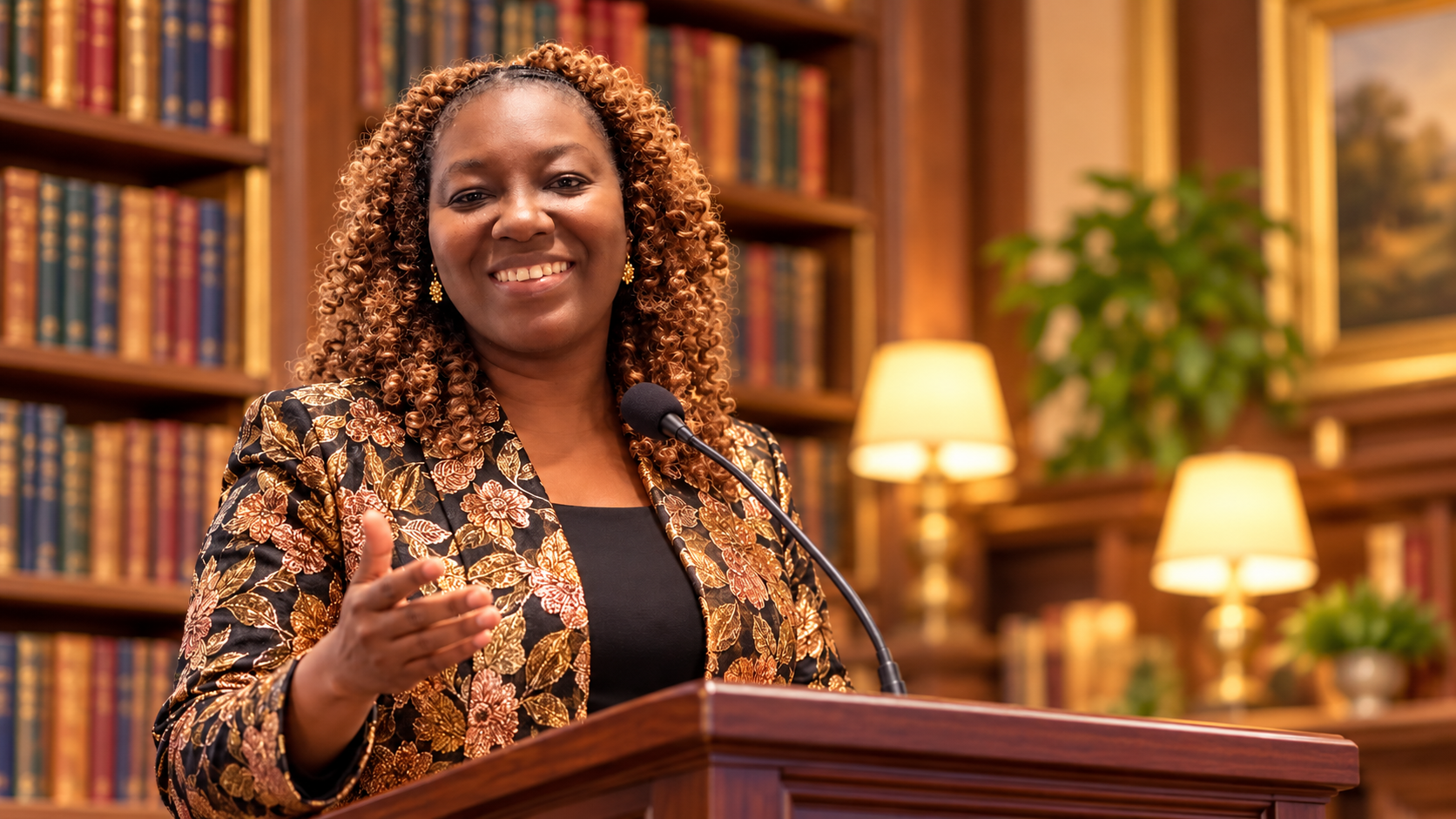
When I first stepped into Toastmasters, I did not arrive as someone who had everything figured out.
I came with experience. I came with ideas. I came with a willingness to learn. But I also came with the same nerves, doubts, and questions that many people carry when they are asked to stand in front of others and speak.
Over time, I learned that courage does not always look dramatic.
Sometimes courage is simply raising your hand.
Sometimes it is accepting a role when you are not completely sure you are ready.
Sometimes it is standing at the front of the room with your heart racing and speaking anyway.
And sometimes it is allowing yourself to be evaluated, corrected, encouraged, and challenged so that you can become better.
Confidence Is Built, Not Given
One of the biggest lessons Toastmasters has reinforced for me is that confidence grows through practice.
We often look at confident speakers and assume they have always been that way. We see the finished speech, the steady voice, the polished delivery, and the ease with which they command a room.
What we do not always see are the rehearsals, the forgotten lines, the uncomfortable pauses, the feedback, the mistakes, and the decision to try again.
Confidence is not something we have to wait for before we begin.
Very often, confidence comes because we began.
Feedback Is Part of Growth
Learning to receive feedback is its own kind of courage.
It can be tempting to hear an evaluation and focus only on what went wrong. But good feedback is not meant to diminish us. It gives us another set of eyes.
It helps us notice what we may not see for ourselves.
Toastmasters has reminded me that growth requires both encouragement and correction. A strong evaluator can celebrate what worked while helping us recognise where we can stretch further.
That lesson applies far beyond public speaking.
In leadership, ministry, work, relationships, and personal development, we grow when we remain teachable.
Leadership Often Begins with Service
Toastmasters is not only about speeches.
Some of the most valuable lessons happen in the roles that keep a meeting moving: timing, evaluating, organising, encouraging, mentoring, planning and leading.
Leadership is often found in the willingness to serve where you are needed.
It is easy to associate leadership with titles. But the strongest leaders I have encountered understand that leadership is also responsibility.
It is preparing when others are depending on you.
It is helping someone else find their voice.
It is creating space for another person to grow.
It is showing up consistently.
Your Voice Has Value
Perhaps one of the most important lessons from the podium is this:
Your voice has value.
You do not have to sound like someone else.
You do not need another person’s personality, accent, style or story.
The goal is not to become a copy of a confident speaker you admire.
The goal is to become more comfortable and effective using your own voice.
There is something powerful about reaching the point where you stop asking, “Do I belong here?” and begin asking, “How can I contribute?”
That shift changes everything.
Courage Grows Every Time We Use It
I still believe there is always something more to learn.
Every speech teaches something.
Every role stretches a different skill.
Every evaluation offers another opportunity for growth.
And every time we step forward despite uncertainty, courage becomes a little more familiar.
That is one of the things I appreciate most about Toastmasters.
It gives us a place to practise courage before we need it somewhere else.
In the workplace.
In leadership.
In ministry.
In our communities.
In the conversations that matter.
And in the moments when our voice needs to be heard.
Sometimes the podium is not simply where we learn to speak. It is where we learn that we are capable of standing.